

Search for Indicators
Natural Environment
Clean air and water support healthy communities, recreational options and diverse wildlife, and investing in natural resources now benefits future generations. As much as possible, we live in harmony with our environment to enjoy the diverse and beautiful lands, plants and animals that make the Truckee Meadows unique.
This Community Dashboard sponsored by:
The region’s air quality affects the health of our more vulnerable citizens and impacts an active outdoor lifestyle important for tourism, attracting young professionals to the region, and overall health.
The National Ambient Air Quality Standards (previously Pollution Standard Index) measure the region’s air quality affecting our health and outdoor lifestyle, important for tourism and attracting young professionals to the region. Washoe County tracks and produces a 10-year trend report for pollutants. Ozone, which especially affects people with asthma, is typically a summer phenomena from vehicle exhaust, heat, sunlight and wind-carried pollutants from other metropolitan areas. Small particulate matter (PM) are particularly dangerous because they can enter the bloodstream by passing through the lungs. Wildfires may not smell smokey, making small PM particularly dangerous. Wildfires are generally linked to “red” air quality days, but this indicator is also influenced by the following: weather (e.g., high wind blown dust); vehicle miles traveled; congestion; public transportation; alternative transportation; smoke from wildfires, controlled burns or fireplaces; industries; and how often the roads are sanded.
Renewable energy sources directly impact our health, economy and environment, and provide natural resource stewardship for future generations.
A sustainable water supply is a vital component of quality of life in the Truckee Meadows. Meeting community demand requires a long-term outlook for not only water resource management but also initiatives to ensure the Truckee River watershed is healthy and thriving in perpetuity.
The region’s primary drinking water utility is Truckee Meadows Water Authority (TMWA), a community-based water utility formed through a joint-powers agreement between the City of Reno, City of Sparks and Washoe County. TMWA’s water supply portfolio is a mix of surface water and groundwater that serves over 440,000 residents. Groundwater provides approximately 15-20% of supply from regional aquifers. Surface water is conveyed by the Truckee River, which provides 80-85% of the water TMWA produces but amounts to approximately 3-9% of total river flow. Upstream drought reserves are held in six reservoirs and are held primarily for use during drought. Detailed storage information can be found on TMWA’s upstream reserves tracker.
Water demand and conservation outcomes can best be understood by viewing production and consumption data in context of total population (see graphs below). One of the most impactful reductions in demand was due to the conversion from a flat rate to a metered rate billing system.
Smaller residential lots and drought-friendly landscaping have also factored into the ability to serve more people with less water, as outdoor irrigation in the summer can increase residential consumption significantly. Of note, summertime conservation with Assigned Day Watering has been in effect since the mid-1980s. This program helps distribute demand across the system during the summer.
For more information about the quality of our region's drinking water, visit www.tmwa.com.
In community water utilities across the United States, raw water sources must be tested and processed to ensure water is safe to drink. The EPA’s Safe Drinking Water Act sets these parameters and defines the term "contaminant" as being anything in the water other than water molecules.
All drinking water may reasonably be expected to contain at least small amounts of some contaminant. The EPA sets legal threshold limits on more than 90 contaminants for drinking water systems to protect human health. Each year (by July 1), the EPA requires community water systems to release a Consumer Confidence Report to its customers, which is also known as an annual drinking water quality report.
The following subset of data focuses on drinking water quality and is sourced from Truckee Meadows Water Authority’s (TMWA) Annual Water Quality Reports. To view a full set of testing results, go to TMWA’s most current Water Quality Report. Water quality data is also available for specific neighborhoods. TMWA's Water Quality Department is available to get additional context to these findings at 775-834-8118.
Indicator Gauge Icon Legend
Legend Colors
Redis bad, Greenis good, Blueis not statistically different/neutral.
Compared to Distribution
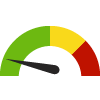 the value is in the best half of communities.
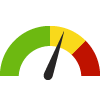 the value is in the 2nd worst quarter of communities.
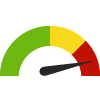 the value is in the worst quarter of communities.
Compared to Target
 meets target;
  does not meet target.
Compared to a Single Value
 lower than the comparison value;
 higher than the comparison value;
 not statistically different from comparison value.
Trend

 non-significant change over time;

 significant change over time;
 no change over time.
Compared to Prior Value
 higher than the previous measurement period;
 lower than the previous measurement period;
 no statistically different change from previous measurement period.
Access to our Natural Environment
Access to Parks County: Washoe
Access to Parks County: Washoe
94.8%
(2020)
Compared to:
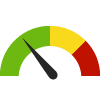
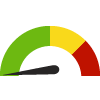
NV Counties
The distribution is based on data from 17 locales.
U.S. Counties
The distribution is based on data from 3,141 U.S. counties and county equivalents.
NV Value
(81.7%)
The regional value is compared to the Nevada State value.
Prior Value
(88.8%)
Prior Value compares a measured value with the previously measured value. Confidence intervals were not taken into account in determining the direction of the comparison.
Parks and Playgrounds County: Washoe
Parks and Playgrounds County: Washoe
94
Number of parks and playgrounds
(2024)
Compared to:
Prior Value
(94)
Prior Value compares a measured value with the previously measured value. Confidence intervals were not taken into account in determining the direction of the comparison.
Trend
This comparison measures the indicator’s values over multiple time periods.<br>The Mann-Kendall Test for Statistical Significance is used to evaluate the trend<br>over 4 to 10 periods of measure, subject to data availability and comparability.
Park Acreage Rate County: Washoe
Park Acreage Rate County: Washoe
3.78
Park acreage rate per 1,000 population
(2024)
Compared to:


Prior Value
(3.79)
Prior Value compares a measured value with the previously measured value. Confidence intervals were not taken into account in determining the direction of the comparison.
Trend
This comparison measures the indicator’s values over multiple time periods.<br>The Mann-Kendall Test for Statistical Significance is used to evaluate the trend<br>over 4 to 10 periods of measure, subject to data availability and comparability.
Air Quality
Air Quality Index: Number of Good Days County: Washoe
Air Quality Index: Number of Good Days County: Washoe
188
Days
(2024)
Compared to:

Prior Value
(220)
Prior Value compares a measured value with the previously measured value. Confidence intervals were not taken into account in determining the direction of the comparison.
Trend
This comparison measures the indicator’s values over multiple time periods.<br>The Mann-Kendall Test for Statistical Significance is used to evaluate the trend<br>over 4 to 10 periods of measure, subject to data availability and comparability.
Air Quality Index: Number of Moderate Days County: Washoe
Air Quality Index: Number of Moderate Days County: Washoe
174
Days
(2024)
Compared to:


Prior Value
(145)
Prior Value compares a measured value with the previously measured value. Confidence intervals were not taken into account in determining the direction of the comparison.
Trend
This comparison measures the indicator’s values over multiple time periods.<br>The Mann-Kendall Test for Statistical Significance is used to evaluate the trend<br>over 4 to 10 periods of measure, subject to data availability and comparability.
Air Quality Index: Number of Unhealthy for Sensitive Groups Days County: Washoe
Air Quality Index: Number of Unhealthy for Sensitive Groups Days County: Washoe
1
Days
(2022)
Compared to:
Prior Value
(16)
Prior Value compares a measured value with the previously measured value. Confidence intervals were not taken into account in determining the direction of the comparison.
Trend
This comparison measures the indicator’s values over multiple time periods.<br>The Mann-Kendall Test for Statistical Significance is used to evaluate the trend<br>over 4 to 10 periods of measure, subject to data availability and comparability.
Air Quality Index: Number of Unhealthy Days County: Washoe
Air Quality Index: Number of Unhealthy Days County: Washoe
4
Days
(2024)
Compared to:
Prior Value
Prior Value compares a measured value with the previously measured value. Confidence intervals were not taken into account in determining the direction of the comparison.
Trend
This comparison measures the indicator’s values over multiple time periods.<br>The Mann-Kendall Test for Statistical Significance is used to evaluate the trend<br>over 4 to 10 periods of measure, subject to data availability and comparability.
Air Quality Index: Number of Very Unhealthy Days County: Washoe
Air Quality Index: Number of Very Unhealthy Days County: Washoe
0
Days
(2024)
Compared to:
Prior Value
Prior Value compares a measured value with the previously measured value. Confidence intervals were not taken into account in determining the direction of the comparison.
Trend
This comparison measures the indicator’s values over multiple time periods.<br>The Mann-Kendall Test for Statistical Significance is used to evaluate the trend<br>over 4 to 10 periods of measure, subject to data availability and comparability.
Annual Ozone Air Quality County: Washoe
Annual Ozone Air Quality County: Washoe
5
(2021-2023)
Compared to:
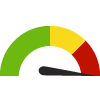
Air Quality Index
The American Lung Association (ALA) assigns grades A-F to counties (A=1; B=2; C=3; D=4; F=5), based on average annual number of days that ozone levels exceeded U.S. standards during the three year measurement period. The five-point grading scale was used for the distribution (Green = <2; Yellow = 2 - 3; Red = >3). The air quality data is collected by the EPA and summarized by the ALA.
Prior Value
(5)
Prior Value compares a measured value with the previously measured value. Confidence intervals were not taken into account in determining the direction of the comparison.
Trend
This comparison measures the indicator’s values over multiple time periods.<br>The Mann-Kendall Test for Statistical Significance is used to evaluate the trend<br>over 4 to 10 periods of measure, subject to data availability and comparability.
Annual Particle Pollution County: Washoe
Annual Particle Pollution County: Washoe
5
(2021-2023)
Compared to:
Air Quality Index
The American Lung Association (ALA) assigns grades A-F to counties (A=1; B=2; C=3; D=4; F=5), based on average annual number of days that particle pollution levels exceeded U.S. standards during the three year measurement period. The five-point grading scale was used for the distribution (Green = <2; Yellow = 2 - 3; Red = >3). The air quality data is collected by the EPA and summarized by the ALA.
Prior Value
(5)
Prior Value compares a measured value with the previously measured value. Confidence intervals were not taken into account in determining the direction of the comparison.
Trend
This comparison measures the indicator’s values over multiple time periods.<br>The Mann-Kendall Test for Statistical Significance is used to evaluate the trend<br>over 4 to 10 periods of measure, subject to data availability and comparability.
Air Pollution due to Particulate Matter County: Washoe
Air Pollution due to Particulate Matter County: Washoe
11.2
Micrograms per cubic meter
(2020)
Compared to:

NV Counties
The distribution is based on data from 16 locales.
U.S. Counties
The distribution is based on data from 3,064 U.S. counties and county equivalents.
NV Value
(8.2)
The regional value is compared to the Nevada State value.
US Value
(7.4 in 2019)
The regional value is compared to the national value.
Prior Value
(6.0)
Prior Value compares a measured value with the previously measured value. Confidence intervals were not taken into account in determining the direction of the comparison.
Trend
This comparison measures the indicator’s values over multiple time periods.<br>The Mann-Kendall Test for Statistical Significance is used to evaluate the trend<br>over 4 to 10 periods of measure, subject to data availability and comparability.
Extreme Weather
Number of Extreme Heat Days County: Washoe
Number of Extreme Heat Days County: Washoe
13
Days
(2023)
Compared to:
Prior Value
(36)
Prior Value compares a measured value with the previously measured value. Confidence intervals were not taken into account in determining the direction of the comparison.
Trend
This comparison measures the indicator’s values over multiple time periods.<br>The Mann-Kendall Test for Statistical Significance is used to evaluate the trend<br>over 4 to 10 periods of measure, subject to data availability and comparability.
Number of Extreme Heat Events County: Washoe
Number of Extreme Heat Events County: Washoe
9
Events
(2023)
Compared to:
Prior Value
(35)
Prior Value compares a measured value with the previously measured value. Confidence intervals were not taken into account in determining the direction of the comparison.
Trend
This comparison measures the indicator’s values over multiple time periods.<br>The Mann-Kendall Test for Statistical Significance is used to evaluate the trend<br>over 4 to 10 periods of measure, subject to data availability and comparability.
Number of Extreme Precipitation Days County: Washoe
Number of Extreme Precipitation Days County: Washoe
6
Days
(2023)
Compared to:
Prior Value
(15)
Prior Value compares a measured value with the previously measured value. Confidence intervals were not taken into account in determining the direction of the comparison.
Trend
This comparison measures the indicator’s values over multiple time periods.<br>The Mann-Kendall Test for Statistical Significance is used to evaluate the trend<br>over 4 to 10 periods of measure, subject to data availability and comparability.
Weeks of Moderate Drought or Worse County: Washoe
Weeks of Moderate Drought or Worse County: Washoe
47
Weeks per year
(2021)
Compared to:
Prior Value
(26)
Prior Value compares a measured value with the previously measured value. Confidence intervals were not taken into account in determining the direction of the comparison.
Trend
This comparison measures the indicator’s values over multiple time periods.<br>The Mann-Kendall Test for Statistical Significance is used to evaluate the trend<br>over 4 to 10 periods of measure, subject to data availability and comparability.
Truckee River Education
Truckee River Education
Knowing that the Truckee River Supplies 85% of Our Drinking Water
Value
Compared to:
Knowing that the Truckee River Supplies 85% of Our Drinking Water County: Washoe
Knowing that the Truckee River Supplies 85% of Our Drinking Water County: Washoe
89.3%
(2024)
Compared to:
Prior Value
(79.5%)
Prior Value compares a measured value with the previously measured value. Confidence intervals were not taken into account in determining the direction of the comparison.
Trend
This comparison measures the indicator’s values over multiple time periods.<br>The Mann-Kendall Test for Statistical Significance is used to evaluate the trend<br>over 4 to 10 periods of measure, subject to data availability and comparability.
Truckee River Education
Students Participating in Truckee River Education Programs
Value
Compared to:
Students Participating in Truckee River Education Programs County: Washoe
Students Participating in Truckee River Education Programs County: Washoe
4,814
Number of Students
(2024)
Compared to:
Prior Value
(10,935)
Prior Value compares a measured value with the previously measured value. Confidence intervals were not taken into account in determining the direction of the comparison.
Trend
This comparison measures the indicator’s values over multiple time periods.<br>The Mann-Kendall Test for Statistical Significance is used to evaluate the trend<br>over 4 to 10 periods of measure, subject to data availability and comparability.
Amenities Available Along the Truckee River County: Washoe
Amenities Available Along the Truckee River County: Washoe
185
Number of Amenities
(2021)
Compared to:
Community Target
(185)
Knowing What Non-Point Source Pollution Is County: Washoe
Knowing What Non-Point Source Pollution Is County: Washoe
69.4%
(2024)
Compared to:
Prior Value
(41.7%)
Prior Value compares a measured value with the previously measured value. Confidence intervals were not taken into account in determining the direction of the comparison.
Trend
This comparison measures the indicator’s values over multiple time periods.<br>The Mann-Kendall Test for Statistical Significance is used to evaluate the trend<br>over 4 to 10 periods of measure, subject to data availability and comparability.
Water Quality & Usage
Water Consumption: Production County: Washoe
Water Consumption: Production County: Washoe
88,440
Acre feet
(2024)
Compared to:
Prior Value
(80,781)
Prior Value compares a measured value with the previously measured value. Confidence intervals were not taken into account in determining the direction of the comparison.
Water Consumption: Total Retail Water Use (acre feet) County: Washoe
Water Consumption: Total Retail Water Use (acre feet) County: Washoe
77,299
Acre feet
(2024)
Compared to:
Prior Value
(69,792)
Prior Value compares a measured value with the previously measured value. Confidence intervals were not taken into account in determining the direction of the comparison.
Water Consumption: Usage Per Person County: Washoe
Water Consumption: Usage Per Person County: Washoe
60,615
Gallons
(2024)
Compared to:
Prior Value
(56,587)
Prior Value compares a measured value with the previously measured value. Confidence intervals were not taken into account in determining the direction of the comparison.
Antimony Contaminants in Drinking Water County: Washoe
Antimony Contaminants in Drinking Water County: Washoe
2.4
Micrograms per liter (ug per L)
(2024)
Compared to:
Maximum Contaminant Level set by EPA
(6)
Arsenic Contaminants in Drinking Water County: Washoe
Arsenic Contaminants in Drinking Water County: Washoe
6.8
Micrograms per liter (ug per L)
(2024)
Compared to:
Maximum Contaminant Level set by EPA
(10)
Chromium Contaminants in Drinking Water County: Washoe
Chromium Contaminants in Drinking Water County: Washoe
5.6
Micrograms per liter (ug per L)
(2024)
Compared to:
Maximum Contaminant Level set by EPA
(100)
Copper Contaminants in Drinking Water County: Washoe
Copper Contaminants in Drinking Water County: Washoe
0.134
Milligrams per liter (mg per L)
(2022-2024)
Compared to:
Action Level set by the EPA
(1.3)
Daily Dose of UV Irradiance County: Washoe
Daily Dose of UV Irradiance County: Washoe
4,374
Joule per square meter
(2020)
Compared to:
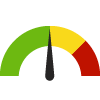

NV Counties
The distribution is based on data from 17 locales.
NV Value
(4,419)
The regional value is compared to the Nevada State value.
Prior Value
(3,803)
Prior Value compares a measured value with the previously measured value. Confidence intervals were not taken into account in determining the direction of the comparison.
Trend
This comparison measures the indicator’s values over multiple time periods.<br>The Mann-Kendall Test for Statistical Significance is used to evaluate the trend<br>over 4 to 10 periods of measure, subject to data availability and comparability.
Fluoride Contaminants in Drinking Water County: Washoe
Fluoride Contaminants in Drinking Water County: Washoe
0.210
Milligrams per liter (mg per L)
(2024)
Compared to:
Maximum Contaminant Level set by EPA
(4)
Haloacetic Acids (HAA5) Contaminants in Drinking Water County: Washoe
Haloacetic Acids (HAA5) Contaminants in Drinking Water County: Washoe
22
Micrograms per liter (ug per L)
(2024)
Compared to:
Maximum Contaminant Level set by EPA
(60)
Water Quality & Usage
Knowing Ways to Limit Non-Point Source Water Pollution to the Truckee River
Value
Compared to:
Knowing Ways to Limit Non-Point Source Water Pollution to the Truckee River County: Washoe
Knowing Ways to Limit Non-Point Source Water Pollution to the Truckee River County: Washoe
75.0%
(2024)
Compared to:
Prior Value
(66.7%)
Prior Value compares a measured value with the previously measured value. Confidence intervals were not taken into account in determining the direction of the comparison.
Lead Contaminants in Drinking Water County: Washoe
Lead Contaminants in Drinking Water County: Washoe
0.00
Micrograms per liter (ug per L)
(2022-2024)
Compared to:
Action Level set by the EPA
(15)
Nitrate-as-Nitrogen Contaminants in Drinking Water County: Washoe
Nitrate-as-Nitrogen Contaminants in Drinking Water County: Washoe
8.5
Milligrams per liter (mg per L)
(2024)
Compared to:
Maximum Contaminant Level set by EPA
(10)
Taking Steps to Prevent Non-Point Source Water Pollution County: Washoe
Taking Steps to Prevent Non-Point Source Water Pollution County: Washoe
85.7%
(2024)
Compared to:
Prior Value
(88.0%)
Prior Value compares a measured value with the previously measured value. Confidence intervals were not taken into account in determining the direction of the comparison.
Tetrachloroethylene Contaminants in Drinking Water County: Washoe
Tetrachloroethylene Contaminants in Drinking Water County: Washoe
1.8
Micrograms per liter (ug per L)
(2024)
Compared to:
Maximum Contaminant Level set by EPA
(5)
Trichloroethylene Contaminants in Drinking Water County: Washoe
Trichloroethylene Contaminants in Drinking Water County: Washoe
1.2
Micrograms per liter (ug per L)
(2024)
Compared to:
Maximum Contaminant Level set by EPA
(5)
Trihalomethanes (TTHM)s Contaminants in Drinking Water County: Washoe
Trihalomethanes (TTHM)s Contaminants in Drinking Water County: Washoe
36
Micrograms per liter (ug per L)
(2024)
Compared to:
Maximum Contaminant Level set by EPA
(80)
Uranium Contaminants in Drinking Water County: Washoe
Uranium Contaminants in Drinking Water County: Washoe
9.6
Micrograms per liter (ug per L)
(2024)
Compared to:
Maximum Contaminant Level set by EPA
(30)
